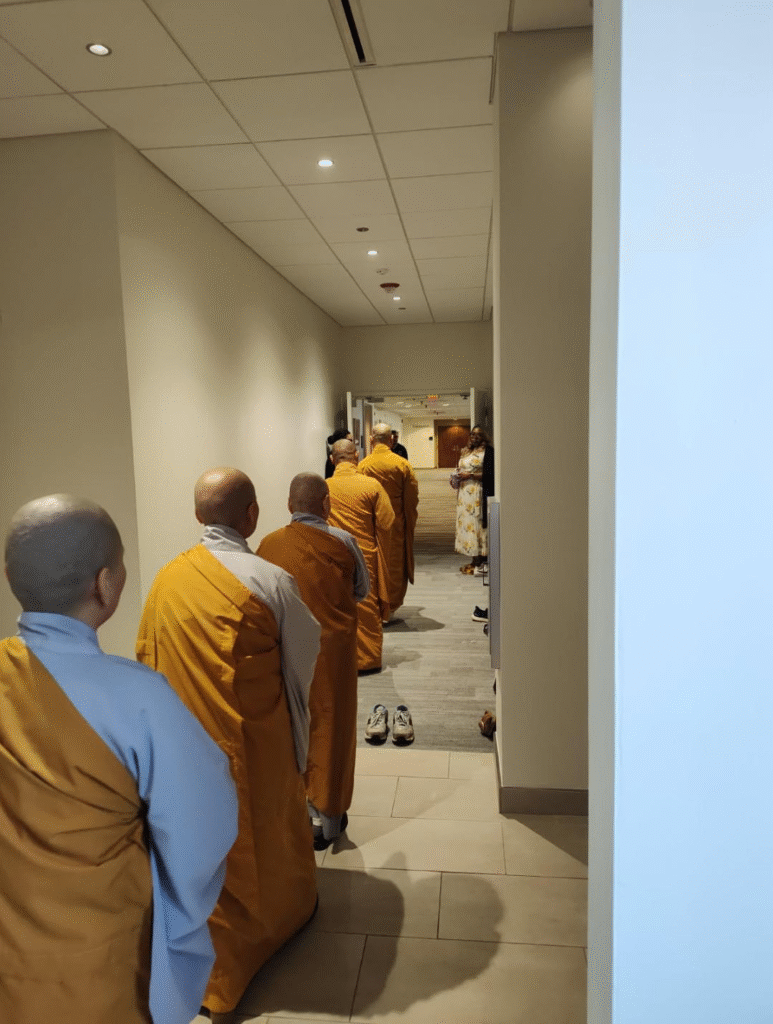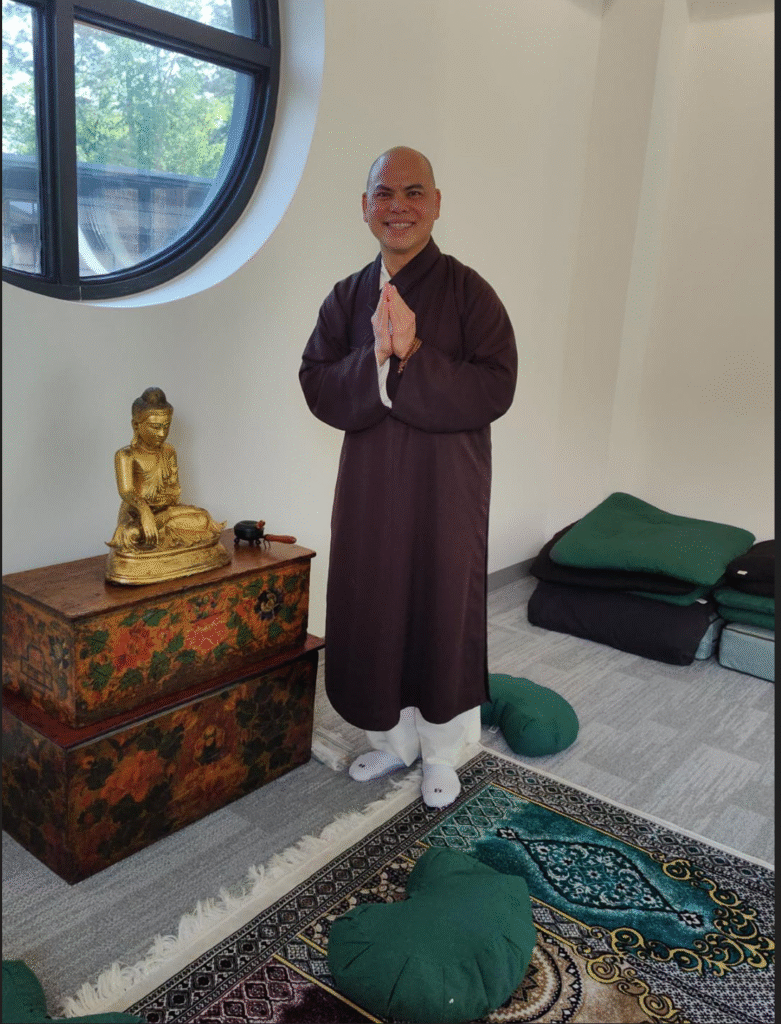

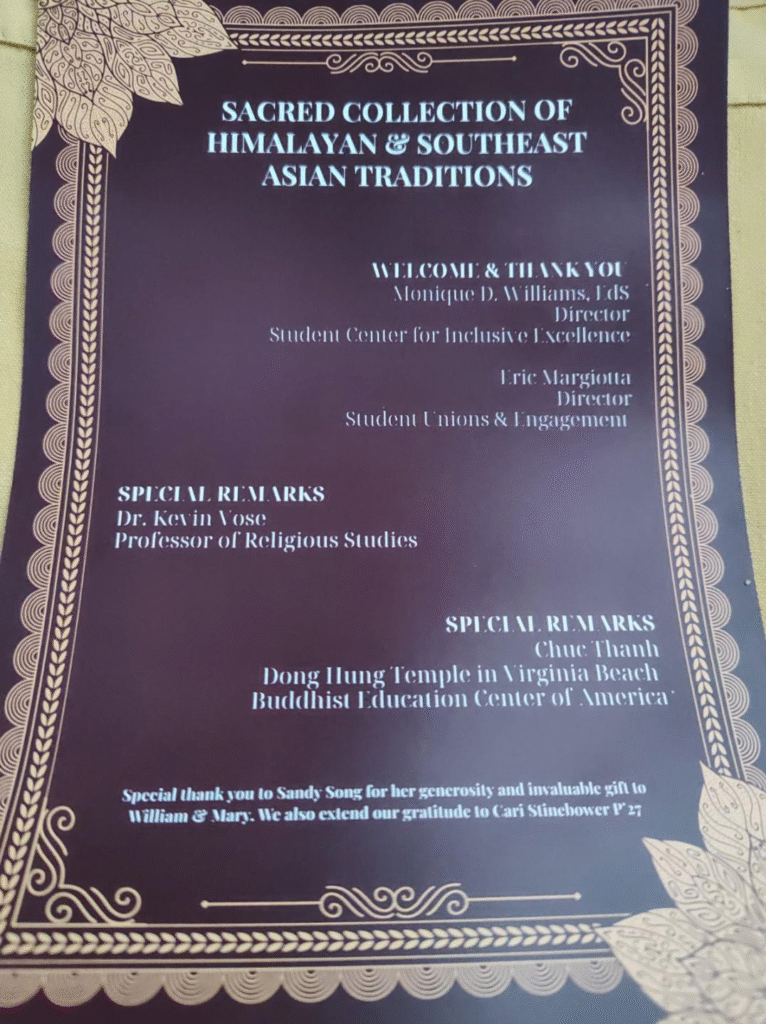
It was indeed an auspicious moment on Friday, April 24, to attend the blessing of a recently gifted 19th-century Burmese Buddha statue at the College of William and Mary. Venerable Dharma Master Chuc Thanh, who was accompanied by other monastics from Đông Hưng Temple – Buddhist Education Center of America in Virginia Beach and Đông Phước Temple in Newport News, transformed the event into an opportunity for spiritual renewal.
As a faculty member and Buddhist practitioner, I have to admit that I was amazed at the number of students in attendance on a late Friday afternoon so close to exam week, but then I thought, this event is exactly what they needed during such a stressful time-a moment of spiritual reflection that the teachings of Buddha can still offer internal peace even in a whirlwind of academic activities.
After consecrating the statue of Buddha Shakyamuni, Chuc Thanh offered a teaching that no matter where we are, no matter what our station in life is, we all have the opportunity to offer compassion and love to one another. As he spoke, we were reminded of the true symbolic meaning of the relic that we have a universal obligation to our fellow man to offer compassion and kindness to whomever we meet. That I thought this is why these statues and other works of art become sacred. They are physical reminders in a material world that we all should make time to stop and consider how we live and apply our spiritual values.
After reflecting on Chuc Thanh’s words of wisdom, I felt how perfectly they summarized the first essential teaching given by the Buddha immediately after his enlightenment in Bodhgaya, India; just place the suffering of others as important as our own suffering. This is the key theme in Buddha’s Four Noble Truths; there is suffering, there is a cause of suffering, there is an end of suffering, and finally, the fourth, there is a way leading to the end of suffering.
As Chuc Thanh led prayer and chanting, you could feel the room become more peaceful and calm. One could sense the students, faculty, and staff relax from their busy day and anticipation of final tests and other duties. Everyone seemed to realize there was another way to approach their daily problems and challenges, and that the solution, the Noble Eightfold Path, was freely available to everyone. Amazingly simple and seemingly easy to apply, they are: right view, right intention, right speech, right action, right livelihood, right effort, right mindfulness, and right concentration.
I realized that I had not so much come to see an ancient relic rededicated, or just to enjoy a friendly reunion of friends and students, but more importantly, to hear and feel once more these timely teachings of the Buddha and join Chuc Thanh and his monastic brothers and sisters in remembering why we are here as human beings in the first place.
Alan Flanders, PhD
The College of William and Mary